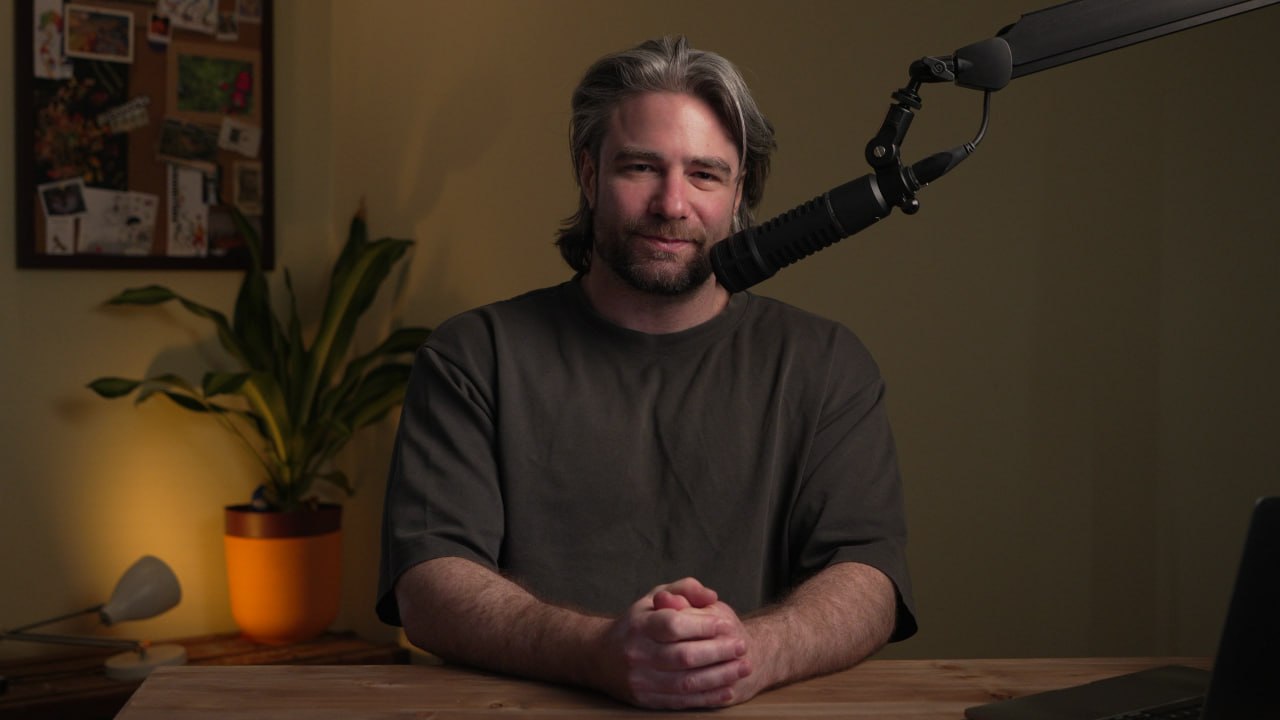
David Canellis is an editor, journalist, and podcast host at Blockworks. He’s primarily focused on data-driven coverage of the Web3 industry and its broader macro implications. And is currently the editor and host of The Breakdown, where he explores industry developments, market movement, and global power structures shaping crypto.
David has been telling the story of crypto since 2018, shaping editorial strategy and content for a range of media platforms and brands. He is also a co-founder of Protos, where he helped pioneer investigative, data-led reporting in the digital asset space. His work has been cited by The New York Times, Financial Times, Reuters, the Federal Reserve, Morgan Stanley, Private Eye, and VICE.
Tell us a little bit about yourself and how you got into crypto.
I studied literature and writing at university (and half-finished a computer science degree before dropping out). I briefly worked in the esports industry in Australia when pro-gaming was really big around 2010.
As for crypto, I started out as a pleb! Bought my first BTC in 2017 and was quickly trading shitcoins. My “strategy” involved scanning Twitter for 3-4 coins with lots of buzz that day, then pulling up their charts on Binance and swing trading between them.
Needless to say, this didn’t exactly convert to generational wealth. But it did lead me to my first freelance gig writing about crypto, which came about after connecting with another degenerate in a Telegram chat for an ICO that never made it.
Still, it was enough to quit my shitty day job (working retail in wine stores) and I moved to the Netherlands in mid-2018 to write about crypto full-time. And I’m still here!
What made you want to reboot the Breakdown podcast, and what’s your vision with it?
We all know that 95% of podcasts about crypto are essentially the same: Talking heads on Zoom calls riffing on the hot news of the week, or serving as a springboard for a project to explain their position in the market to better inform investors.
Obviously, both formats work and are worthwhile. But I’d rather not compete directly against all the other existing podcasts and instead offer the audience something really different. I’ve boosted the production value and dedicated 33%-50% of each episode to storytelling — a mini-video essay about the topic of the week.
Then, I invite an expert guest to sanity check my take in a recorded call, having reviewed the monologue ahead of time. That way, the host, guest and audience are on the same page going into the conversation, which makes for a much higher signal-to-noise ratio
What makes a guest or topic an instant “yes” for the show?
Original thoughts and original thinkers always take priority for me. The most effective content makes you raise your eyebrows and say “huh, I never thought about it like that.” So any topic that’s in the zeitgeist is fair game, bonus points if there’s a way to tie in a crypto/tech angle.
That also means I’m not limited to only featuring “industry insider” guests, but also commentators, analysts & researchers and pundits who have an original or adversarial take on what’s happening.
What kind of conversations do you think crypto needs more of right now?
Crypto really did change the world, just not in the ways that many expected. And crypto has now been around for so long that the world is instead changing around crypto. I think it’s clear that crypto will reinvent itself in the next five years, and it’s important that we at least think critically about what we are all doing here within that context.
That doesn’t necessarily mean we need to nostalgiamaxx about crypto in 2015, or 2017, or 2021. I also don’t think we need to be decentralization maxis or diehard Cypherpunks. But we do need to be honest and straightforward about how crypto fits into the reality we live in right now. But good luck defining what that reality even is!
What story or investigation are you most proud of from your career so far?
The Tether Papers from my time at Protos would be the most cracked investigation! It consumed my life for a good 6-8 months, and came out at a time when Alameda and FTX were really at peak influence:
https://protos.com/tether-papers-crypto-stablecoin-usdt-investigation-analysis
And then at Blockworks, it would have to be the BlockFi feature which detailed insider info regarding Zac Prince’s Google Calendar as the company was unravelling amid the FTX fallout: https://blockworks.com/news/how-blockfi-went-from-tech-unicorn-to-crypto-burnout
How important is personality and voice in crypto journalism, and how do you think about that in your own work?
It’s something of a lost art, I think. More broadly, tech journalism has, for the longest time, really relied on snarkiness to get its point across, to the point of outright skepticism. And it was something that I really plugged into for a lot of my career, especially in the beginning.
Cynicism is often mistaken for neutrality. Increasingly, I feel being “neutral” about a topic is important for journalism but it can easily become an excuse to avoid really engaging with the story on an intellectual level. But I suppose it depends on the outlet and audience that one is creating content for.
At the same time, it’s also not necessary to have a “point” or some grand insight every time you write. The audience can only relate to you if you show authenticity, and they appreciate if you are flawed and acknowledge those flaws.
How do you see the relationship between traditional finance, crypto, and media evolving over the next few years?
Everything is content! Investor relations is content. Marketing is content. Journalism is content.
I think TBPN’s acquisition by OpenAI has reshaped how people think about reach and influence, and all it will take is another similar acquisition to really solidify the idea that media consumed by insiders is much more important than media consumed by the masses.
I worry that could put further strain on funding models for media that aren’t oriented towards catering to the, much smaller, insider crowd. Still, I’m optimistic that there will always be those willing to fight (and fund) the good fight.